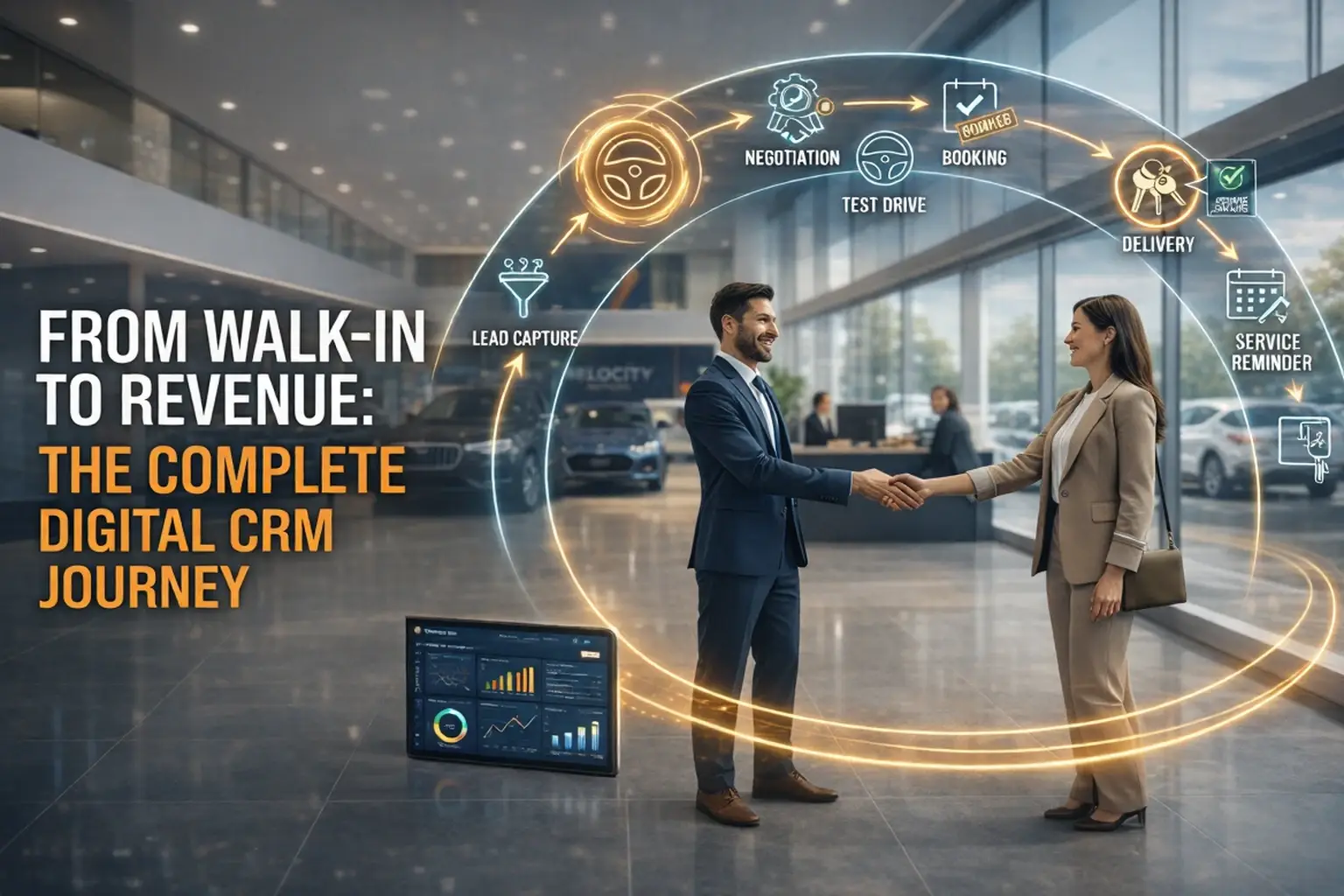
Customer journeys are no longer the same. Customers don’t just come to buy a vehicle anymore. They come to experience the dealership first. From the moment they walk in or drop an enquiry online, they are your customer. They have already started forming an opinion. A slow response, a missed follow-up, or even a small confusion in the process will break your sale. Yes, even this is often enough for them to walk away and choose another dealer.
For dealerships, this journey is more than being polite or responsive. It directly decides how many enquiries turn into actual sales. It also shows how many customers come back and how the business grows over time. This is where auto dealer CRM software quietly does the heavy lifting. It helps by connecting every step of the customer journey into one smooth, dependable flow.
How does a CRM capture and manage walk-in leads effectively?
Walk-ins are very unreliable. They are the equivalent of a customer browsing through your store online and adding things to their cart. They might abandon their cart and never come back. Similarly, in person, a customer walks in and asks a few questions. He looks around and shows interest in some options but then leaves. If their details are not captured at that moment, the lead is gone. With test-drive lead capture inside the CRM, every walk-in enquiry is recorded instantly.
Sales teams log customer details, preferred models, budget, and buying timeline directly into the system. The lead is assigned immediately, so there is clear ownership from the first conversation. Because this links with auto inventory management, executives can check available variants, colours, and stock on the spot, without keeping the customer waiting.
Why is test drive scheduling a turning point in the sales journey?
The test drive is a make-or-break moment. It’s when your customers are excited and curious. They are very close to deciding. But missed reminders, delayed calls, or unavailable vehicles can instantly kill that momentum. People don’t make big life decisions on impulse. But the process cannot keep stretching or getting delayed to cause them changes of mind.
This is where a test ride management CRM keeps the process tight and organised from start to finish. Every test drive is scheduled, tracked, and followed up automatically with the customer. Sales teams see feedback clearly and know the next step without guessing what to do next. For two wheeler sales CRM users, fast follow-ups after a test ride are critical.
This is because customers rarely wait around before checking another brand. They want to make quick decisions as vehicles are must haves. They are needed for everyday operations, especially for families.
How does CRM support negotiations and booking without confusion?
Negotiation is where information gaps usually appear. Discounts discussed verbally, offers promised but not recorded, or approvals delayed can create frustration on both sides. A well-configured four wheeler sales CRM tracks every stage of negotiation. Offers, pricing discussions, finance options, and booking status are updated in real time.
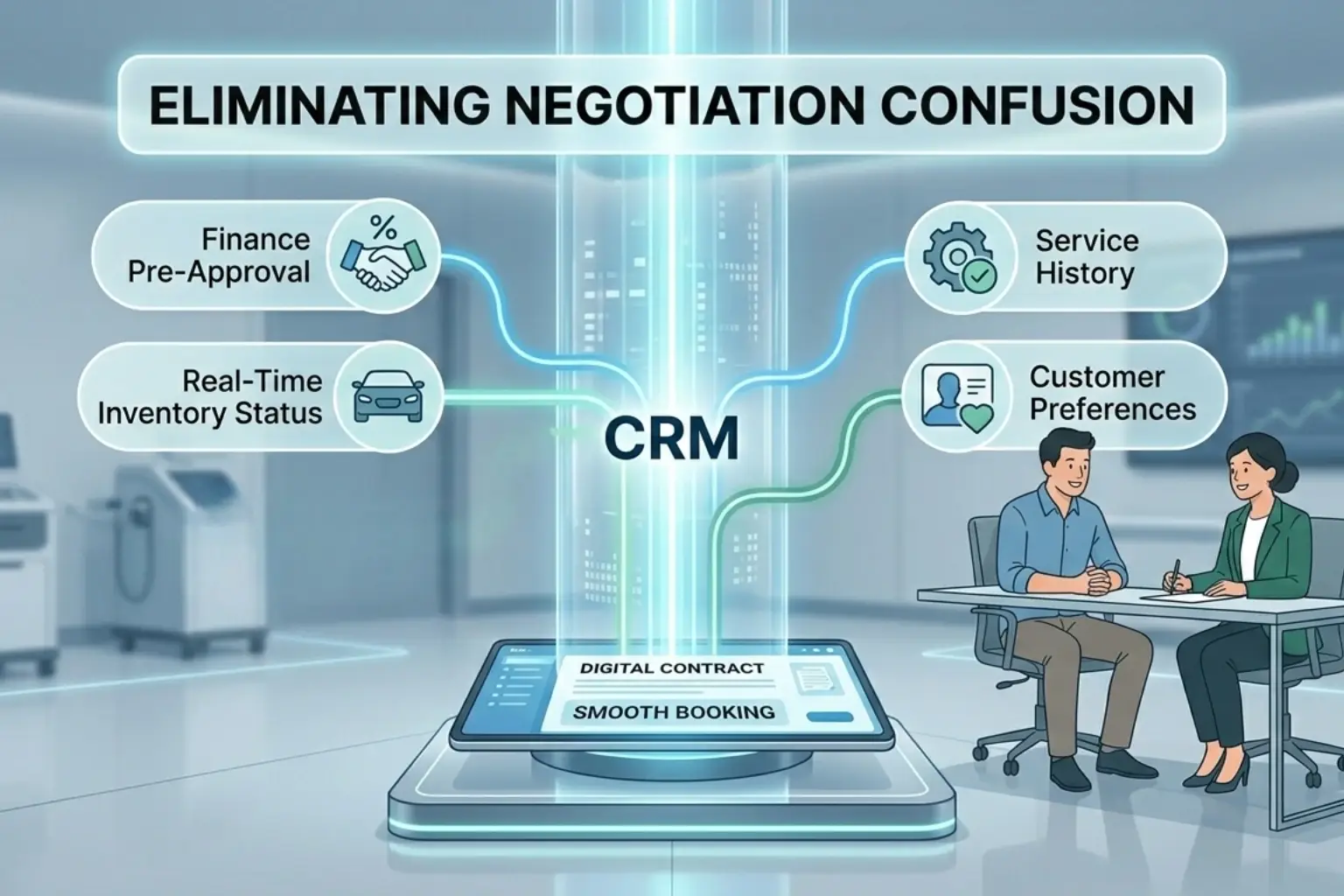
Managers can step in quickly when approvals are needed, avoiding delays that could cost the sale. Because all communication is logged, sales executives don’t need to rely on memory. Customers feel confident because conversations remain consistent, clear, and transparent.
How does CRM ensure a smooth delivery experience for customers?
Delivery day is emotional for customers. Delays, missing documents, or lack of communication can ruin what should be a happy moment. CRM workflows ensure delivery timelines are planned and monitored. Internal teams know when registration, insurance, and accessories must be completed. Insurance renewal automation can even be initiated early, reducing last-minute pressure.
Customers receive timely updates, which builds trust and excitement. This is always better rather than anxiety. This is where the dealership truly stands out as professional and organised. Many dealerships relax after delivery, but this is where long-term value is built. Post-sale engagement determines whether customers return for service, upgrades, or referrals.
A service reminder CRM for bikes or cars makes sure customers get timely service alerts, follow-up calls, and support messages. When this is connected to a workshop management CRM, service teams can prepare in advance, reduce waiting time, and handle visits more smoothly. With a complete 360-degree customer view automotive teams rely on, both sales and service understand the full customer history, not just the most recent visit.
How do automated follow-ups keep customers connected long-term?
Staying in touch with customers shouldn’t feel forced. Automated follow-ups for car sales leads make it natural. A birthday message, a service reminder, or a renewal alert keeps the relationship warm without constant selling. Customers feel remembered, which leads to better retention and referrals without adding work for the team.
Strong dealerships don’t run on individual effort alone. They run on systems that keep everything connected. From the first enquiry to years of ownership, CRM brings sales and communication together. It bridges the gap between inventory and service. This clarity helps managers lead better and make decisions based on facts, not assumptions.
Here’s another example for better understanding. Automated follow-ups for car sales leads exist because people forget. Not because teams don’t care. Sales executives move between walk-ins, calls, test drives, and paperwork all day. In that rush, a follow-up that was meant to happen “later” often never does. When that happens, the customer doesn’t complain. They simply move on.
Automated reminders like service alerts, renewal messages, and feedback requests quietly fix this gap. Customers stay connected to the dealership longer without feeling chased. They feel acknowledged and remembered. This is important as nobody wants to feel like they are sold to. Over time, this consistency builds trust, repeat visits, and referrals without increasing pressure on the team.
High-performing dealerships understand this reality. They don’t depend on memory or hero effort. They use CRM systems that connect sales, inventory, service, and communication into one clear journey. This visibility helps managers spot where leads stall, support teams at the right moment, and make decisions based on real behaviour instead of assumptions.
Final Thoughts: Is your dealership ready to deliver a complete CRM-driven journey?
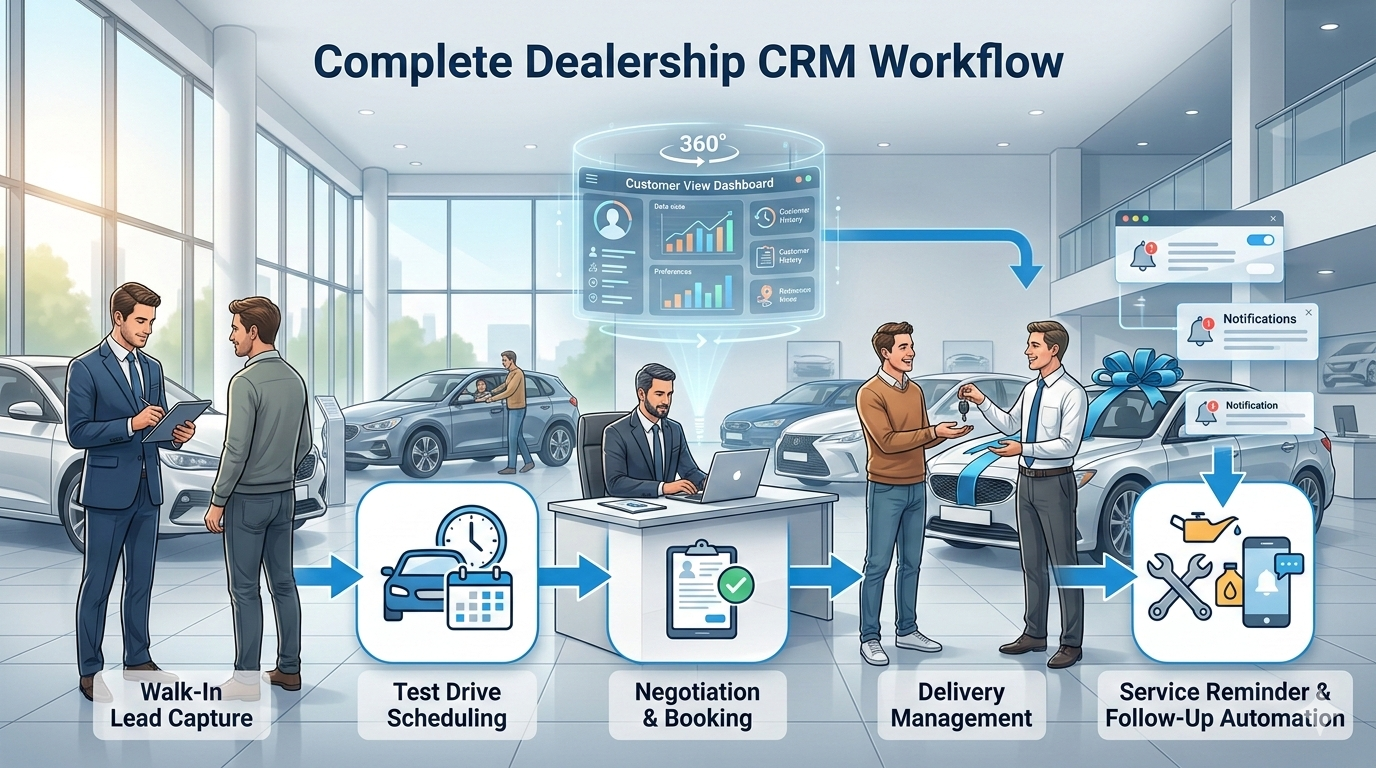
A great dealership experience is not accidental. It is designed by the company and its executives. When every stage from enquiry to delivery is connected through CRM, customers feel confident. They feel more informed and valued during and after their purchase. If your dealership wants consistent conversions, happier customers, and stronger long-term growth, take a look at your CRM.
Many people miss this stage which is a costly mistake. This is because building a complete CRM journey is no longer optional. It is the foundation of how modern dealerships succeed and retain customers. Repeat business will always help you more than constantly finding new customers.
Referrals and testimonials will bring you better sales in the long run. Focus on them and follow up with them right. This is done best using a good CRM tool that is competitive in the market to reach new heights.