A patient leaves your hospital after a successful consultation.
They felt heard. The treatment was clear. The experience was good.
But here’s the reality—good experiences alone don’t guarantee they’ll return.
Because once they step outside, your hospital slowly disappears from their daily life.
There are no reminders. No follow-ups. No connection.
And over time, even a positive experience becomes just a memory.
This is where most hospitals lose patients—not during care, but after it.
A well-implemented healthcare CRM software changes that story completely.
Retention Is Not About One Visit. It’s About the Entire Journey
Hospitals often measure success based on appointments completed.
But patients don’t think in terms of appointments. They think in terms of experiences.
Their journey includes:
- Before the visit
- During the consultation
- After they leave
Most hospitals focus heavily on the middle part.
But retention is built in the before and after.
If those parts are weak, the relationship doesn’t last.
The Silent Gap Where Hospitals Lose Patients
Let’s be honest about what usually happens.
A patient completes treatment. The hospital moves on to the next case.
But the patient still has:
- Questions
- Doubts
- Follow-up needs
- Health concerns
Without structured communication, they handle everything on their own.
That gap creates distance.
And distance leads to disconnection.
Why Even Satisfied Patients Don’t Come Back
This is not always about dissatisfaction. It’s often about absence.
- Out of Sight, Out of Mind
Patients don’t intentionally leave. They simply don’t think about returning.
- No Ongoing Engagement
When communication ends after the visit, the relationship ends too.
- Lack of Guidance
Patients don’t always know when to return unless they’re told.
- Convenience Wins
If another provider communicates better or makes booking easier, patients shift.
CRM Automation Brings Patients Back Into the Loop
Now imagine a different experience.
After leaving the hospital, the patient receives:
- A simple follow-up message checking on their recovery
- A reminder for their next appointment
- A relevant health tip at the right time
These are small actions.
But for patients, they feel significant.
They feel noticed. Guided. Supported.
That’s what a crm for healthcare industry enables—consistent presence without extra manual effort.
How CRM Automation Actually Improves Retention
1. It Extends Care Beyond Hospital Walls
A patient relationship management system ensures care doesn’t stop after discharge.
Patients continue to hear from you:
After treatment
During recovery
Before their next visit
This creates continuity, which is essential for trust.
2. It Reduces Uncertainty for Patients
Healthcare can feel confusing.
A medical CRM platform provides clarity through:
Timely reminders
Clear communication
Structured follow-ups
Patients don’t feel lost—they feel guided.
3. It Builds Familiarity Over Time
Consistency matters more than intensity.
With patient engagement software, patients hear from you regularly—but not excessively.
That steady communication builds familiarity.
And familiarity makes returning feel natural.
4. It Removes Friction From the Patient Experience
One of the biggest reasons patients don’t return is inconvenience.
With a crm for hospitals and clinics, processes become easier:
Quick appointment booking
Automated reminders
Easy rescheduling
When it’s easy to return, patients do.
5. It Creates a Sense of Ongoing Care
Patients don’t want to feel like a one-time case.
With healthcare workflow automation, they feel like part of a continuous care journey.
That emotional connection is what drives loyalty.
The Emotional Side of Patient Retention
Retention is not just operational. It’s emotional.
Patients remember how they felt—not just what was done.
When hospitals:
- Check in after visits
- Send timely reminders
- Share helpful information
Patients feel cared for beyond the consultation.
That feeling is what brings them back.
Real-Life Scenarios That Show the Difference
Scenario 1: Post-Treatment Recovery
Without CRM:
The patient manages recovery alone and may not return for follow-up.
With CRM:
They receive timely check-ins and reminders, making follow-ups more likely.
Scenario 2: Missed Appointment
Without CRM:
The patient forgets and never reschedules.
With CRM:
They receive reminders and rescheduling options, staying connected.
Scenario 3: Preventive Care
Without CRM:
Patients visit only when something goes wrong.
With CRM:
They’re encouraged to return regularly, improving long-term health outcomes.
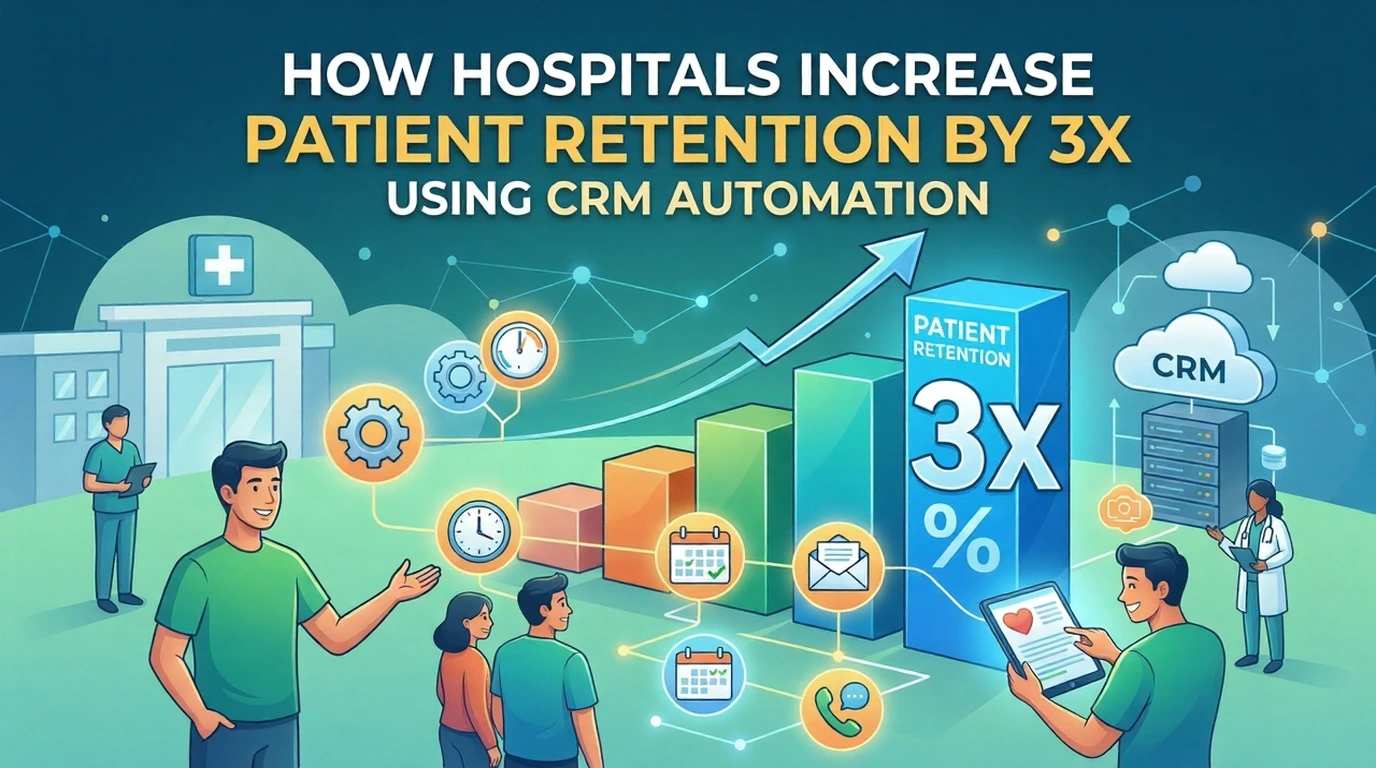
Why Some Hospitals See 3X Retention Growth
When hospitals implement healthcare CRM software effectively, results compound over time.
- Patients Feel Connected
Regular communication creates a sense of relationship.
- Trust Builds Naturally
Consistency shows reliability, which patients value.
- Returning Becomes Habitual
Patients don’t need to think twice—they simply come back.
- Word-of-Mouth Improves
Satisfied, engaged patients are more likely to recommend your hospital.
What to Look for in a CRM for Healthcare
Choosing the right system makes all the difference.
Security and Compliance
A HIPAA compliant CRM ensures patient data is handled safely.
Ease of Use
Your team should be able to use it without complexity.
Automation Capabilities
The system should handle follow-ups, reminders, and communication automatically.
Integration
It should work smoothly with your existing healthcare systems.
A Shift in How Hospitals Think About Growth
Traditionally, growth meant acquiring more patients.
But acquisition is expensive and unpredictable.
Retention, on the other hand, is stable and scalable.
A strong crm for healthcare allows hospitals to:
- Build long-term patient relationships
- Reduce dependency on new patient acquisition
- Create consistent revenue streams
If you want to explore how this works in practice, you can check this solution for
crm for hospital and clinics designed to improve patient engagement and retention.
Start Building Lasting Patient Relationships Today
Patients don’t leave because hospitals fail them.
They leave because the connection fades.
A single visit—even a great one—is not enough to build loyalty.
What matters is what happens after.
With the right crm for hospitals and clinics, hospitals can:
- Stay present in patients’ lives
- Provide guidance beyond the visit
- Build trust through consistency
- Turn occasional visitors into loyal patients
Retention is not about doing more.
It’s about staying connected in the moments that matter.
Start Retaining More Patients with the Right CRM
If your hospital wants to grow, focusing only on new patients is not enough.
The real opportunity lies in the patients you already serve.
A modern crm for hospitals and clinics helps you stay connected, build trust, and increase retention—consistently.
FAQs
1. What is patient retention in healthcare?
Patient retention refers to a hospital’s ability to keep patients returning for future care and services.
2. How does CRM automation improve patient retention?
It ensures consistent communication through follow-ups, reminders, and personalized engagement.
3. Can small clinics use CRM effectively?
Yes, many Healthcare CRM solutions are designed to be scalable and suitable for both small clinics and large hospitals.
4. Does CRM help reduce missed appointments?
Yes, automated reminders significantly reduce no-shows and improve scheduling efficiency.
5. Is CRM difficult to implement in hospitals?
Modern CRM systems are designed for easy integration and user-friendly adoption.